

95+ years of transformation delivery between us.
We built Optume because the standard consulting model doesn't work — and we've spent enough time inside it to know exactly why. Each bio below leads with outcomes, not credentials. One specific fact beats three general claims.
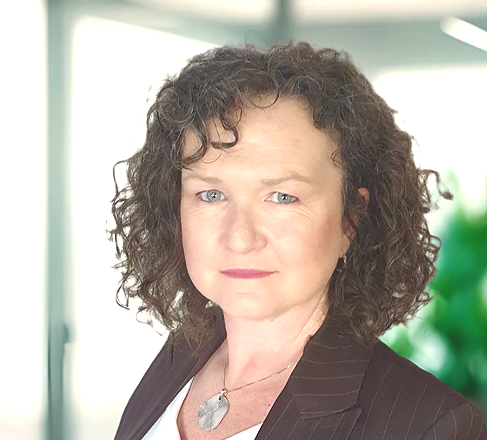
Angela Albiston
Angela Albiston spent 20 years asking the question most programmes skip: what value is this transformation supposed to create — and is the organisation actually capable of delivering it? She built a structured answer to that question. That answer became Optume.
Her career is defined by the programmes others couldn't finish. At a major UK retail group, she took over a failing MS Dynamics ERP and delivered it on time, to a revised budget of £3m, with expanded scope — including the France launch. At a global insurance and risk advisory firm, she put a US$22m OPEX programme back on track and delivered US$3.5m in Year 1 gross benefits. At a global professional services firm, her financial control model was adopted across all their programmes. At a UK financial services institution, she designed a Finance Function operating model that delivered £800k in annual staff savings — with a further £1.2m on system investment.
She is the intellectual originator of the Optume system — having conceived and built the methodology from the Transformation Responsibility Model™ through to the six Invisible Control Engines™.
Lawrence Spence
Lawrence Spence has spent 25 years on the part of transformation that most programmes underinvest in: the moment the system is ready and the organisation isn't. That gap — between technical delivery and sustainable adoption — is where most value is lost. Lawrence's career is built on closing it.
At a major UK airport group, he is currently leading the change for AI workforce transformation across three major airports — 5,000+ operational colleagues in a unionised, safety-critical environment. At an international legal and professional services firm, he established a £10m Managed Services division, built an M&A integration framework that enabled 15 global acquisitions, and delivered a 10% (£8m) margin improvement alongside a 35% reduction in attrition. At a major financial services group, he held accountability for a £10m+ annual project portfolio, embedding a new PMO framework that reduced project costs by 15%.
Lawrence started his career as a software developer — an unusual foundation for a change leader, and a useful one.

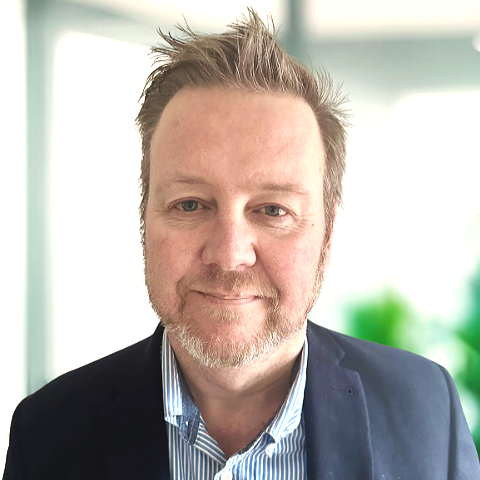
Martin Barker
Martin Barker started as a Chartered Accountant (ACA, Deloitte-affiliated) and became an ERP architect. That combination is rare and valuable: he understands the financial consequences of transformation decisions, not just the delivery consequences. When he sits with a CFO, he speaks their language. When he sits with a CTO, he speaks that one too.
His ERP delivery record spans SAP, Oracle, NetSuite, Microsoft Dynamics and Workday across financial services, media, logistics and professional services. At a 10-entity media group, he architected and delivered a NetSuite OneWorld consolidation — automating intercompany processes and reducing month-end close by approximately 30%. On a specialist insurance group's IFRS17 programme (£18m), he worked across financial systems architecture under significant regulatory pressure. At a global professional services firm, he managed financial architecture across a portfolio with US$2.7 trillion in assets under management.
He has also been the person called in when ERP programmes are in serious trouble — at a property and professional services firm, a technology scale-up, and others — restoring delivery trajectory and stakeholder confidence in distressed situations.
Callum MacAllister
Callum MacAllister has been involved in three "world firsts" in his career. He mentions this not to impress, but because it explains his operating style: he is comfortable without a playbook. When organisations are doing something genuinely new — AI governance, advanced data architecture, operational transformation without a precedent — that's where he adds most value.
He started writing code in 1990 (C, C++, COBOL) and has never lost the technical depth that gives him genuine credibility at every layer of a complex organisation. He led the world's first Microsoft Synapse implementation. At a technology services business, he transformed every KPI in a business preparing for IPO: first-time fix rose to 75%+, defect rate dropped from 1-in-3 to 1-in-8, staff turnover reached near zero, and NPS moved from negative to positive. He serves as Board Advisor for Data & Analytics to a $50B+ US medical services provider.
He treats governance as an architecture discipline — embedded in the design, not bolted on afterwards.

Tell us what's on your mind.
30 minutes, no pitch. We'll tell you honestly whether what we do is relevant to your situation. Book a Reality Check conversation.